Stratford Centre is one of London’s busiest shopping destinations, welcoming around 400,000 visitors every week. Located close to the Olympic Stadium, the centre sits at the bottom of a slope, which makes it particularly vulnerable to fast-moving surface water during heavy rainfall or infrastructure failures.
Flooding history at Stratford Centre
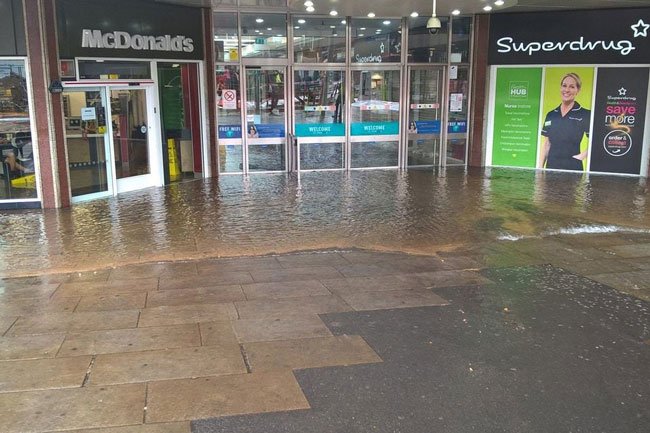
On 29 July 2018, Stratford Centre experienced severe flooding after a water main burst outside the building early on a Sunday morning. Water rushed down the slope and entered the centre “like a tidal wave”. Despite the response of 10 fire engines and 70 firefighters, floodwater spread across the East-West mall and reached 4-6 inches deep in large sections of the North-South mall.
The centre was forced to close for two full days while a major clean-up operation took place. Although no one was injured, the floodwater was judged to be contaminated, creating serious disruption for retailers and visitors. A newly installed soft play area had to be replaced, shops required refits, stock was damaged and valuable trading time was lost. At the time of reporting, costs had already reached £140,000, with further losses expected, alongside unquantifiable reputational damage.
Why Stratford Centre floods
The main entrance to the East Mall is positioned at the bottom of a slope. During periods of heavy rain or sudden discharge, large volumes of water rush downhill at speed. The flow regularly overshoots two surface drains, making them ineffective and allowing water to reach the centre unchecked.
Flooding has occurred several times in the past, historically due to significant rainfall and more recently due to burst water mains. With flash flooding events happening with little warning, Stratford Centre needed a solution that was quick and easy to deploy.
The challenge: flood protection without closing the centre
Keeping the centre open for business was a key priority. Stratford Centre is used daily by families, wheelchair users, prams and buggies, and many people use it as a cut-through. Because of this, a static or fixed flood barrier was ruled out, as it could restrict access and interrupt normal operations.
The site required a flood defence approach that balanced speed of deployment, public access and effective water control.
The solution: FlexiFlood Flood Defence Blocks
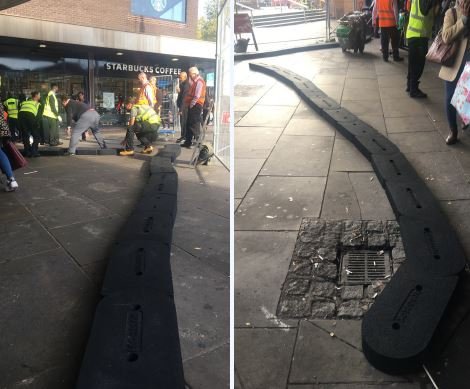
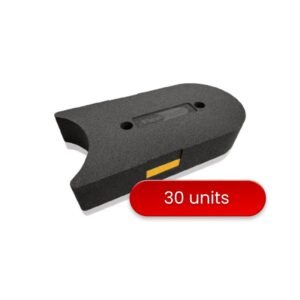
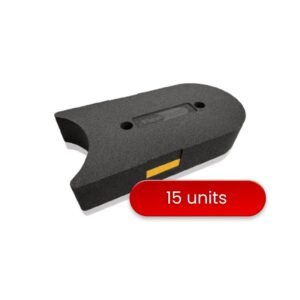
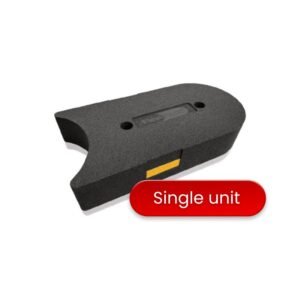
Stratford Centre identified FlexiFlood flood defence blocks as the most suitable solution. The blocks can be deployed quickly and shaped to guide water towards drains, helping to stop water gushing directly into the centre.
Importantly, the blocks can be positioned in a way that still allows visitors to enter and exit the shopping centre, meaning business can continue even when conditions are challenging.
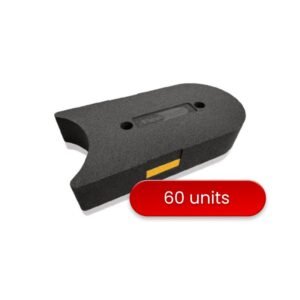
Not only is FlexiFlood a practical alternative to sandbags, it's eco-friendly, too! Our FlexiFlood flood defence blocks are manufactured from recycled tyres - helping to reduce the number of rubber tyres that are sent to landfills or burnt.
Practice deployment and contingency planning
As part of its flood contingency planning, Stratford Centre carried out a practice deployment of FlexiFlood. The exercise was used to create a simple deployment guide so that any member of staff on duty can respond quickly and confidently when flooding threatens.
This preparation gives the centre team peace of mind and supports a consistent response without relying solely on emergency services.
A practical, proven flood defence for busy commercial spaces
This Stratford Centre flood defence case study shows how FlexiFlood Flood Defence Blocks provide a practical alternative to traditional sandbags for commercial properties. They are designed to slow, direct and control fast-moving surface water, while supporting safe access for customers, staff and visitors.
For shopping centres, transport hubs and public-facing buildings where remaining open matters, flexible flood defence blocks offer a reusable and effective approach to improving flood resilience.
Source: Stratford Centre - Flexible Flood Blocks Case Study (UK Flood Defence Alliance).